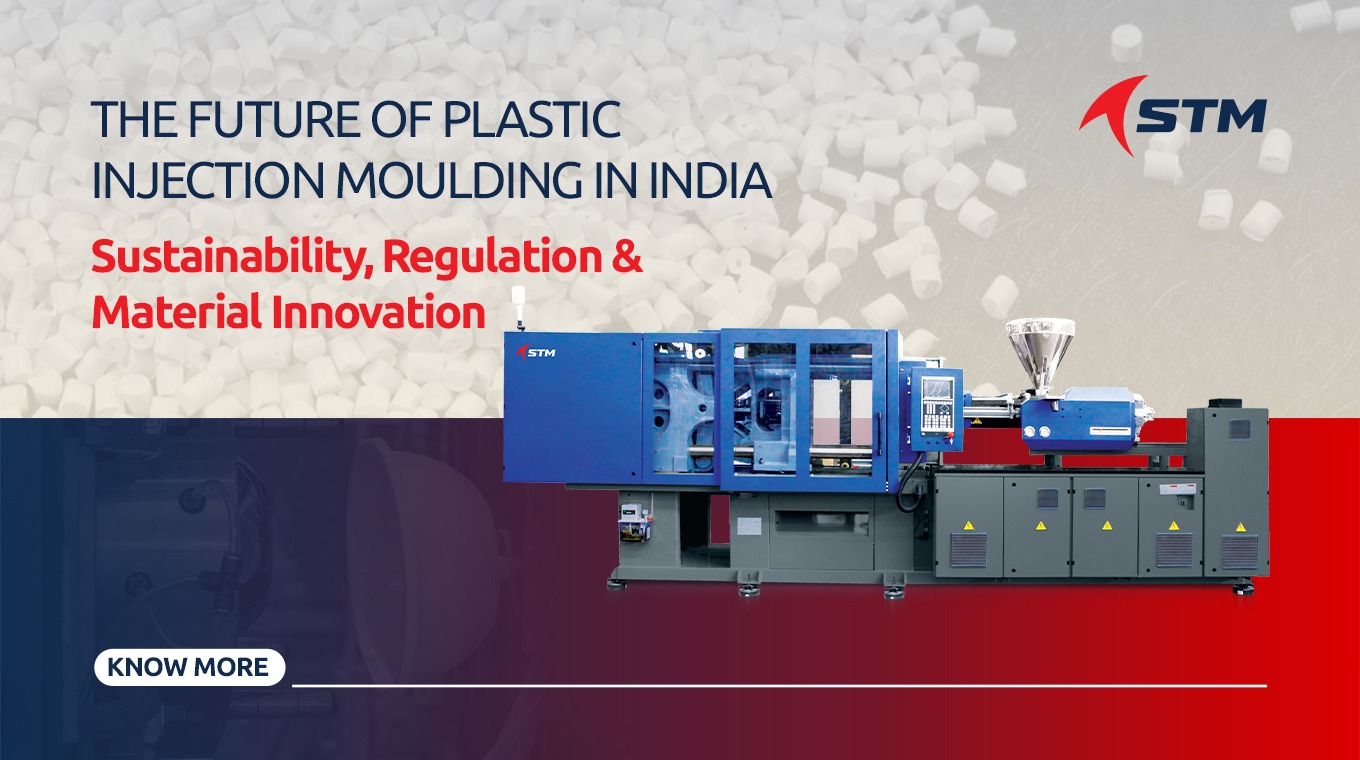
India’s plastic injection moulding industry is at a turning point. As one of the fastest-growing manufacturing sectors in the country, it faces a defining challenge: how to grow without costing the planet.
The answer lies at the intersection of sustainability, smarter regulation, and bold material innovation.
The Indian government has already taken decisive steps. The Plastic Waste Management Rules (amended 2022) banned a wide range of single-use plastics. The Extended Producer Responsibility (EPR) framework now holds manufacturers accountable for the end-of-life of their plastic products.
For injection moulders, this is a wake-up call. Companies that do not adapt risk compliance penalties, loss of contracts with EPR-conscious brands, and exclusion from global export markets that are increasingly demanding sustainable supply chains.
But regulation is not just a burden - it is a business opportunity for those who move first.
Material innovation is transforming what injection moulding can achieve in India. Three key shifts are underway:
1. Bioplastics Going Mainstream
Materials like PLA (Polylactic Acid) and PHA (Polyhydroxyalkanoates) - derived from sugarcane, corn, or cassava - are gaining traction in packaging and consumer goods. India, as a major agricultural producer, has a natural advantage in sourcing these feedstocks locally.
2. Recycled Content as Standard
Recycled PP, HDPE, and rPET are increasingly being used as feedstocks in injection moulding. With EPR targets pushing brands to use post-consumer recycled (PCR) content, demand for quality recycled material is rising sharply.
3. Natural Fibre Composites
Blending plastics with jute, coir, hemp, or rice husk reduces virgin plastic usage while leveraging India’s abundant agricultural by-products. These bio-composites are finding application in automotive panels, furniture, and packaging.
Technology and Process Innovation
Sustainability in injection moulding is not just about materials. Indian manufacturers are also investing in:
• All-electric injection moulding machines that cut energy consumption by up to 60% compared to hydraulic systems
• Design for recyclability - engineering parts that can be easily separated and recovered
• Digital process monitoring to reduce scrap rates and material waste on the shop floor
The future of plastic injection moulding in India will be shaped by manufacturers who treat sustainability not as a cost, but as a competitive advantage. The brands they supply - domestic and global - are demanding greener supply chains. The regulations require it. The materials now make it possible.
India has the scale, the agricultural resources, and the engineering talent to lead this transition in Asia.
The question is: will your business be ahead of the curve - or catching up to it?
Looking to transition your injection moulding operations to sustainable materials? Get in touch with our team to explore the right solutions for your production needs.

STM Plastic Machines Pvt. Ltd. offers Specialized Manufacturing Solutions for Various Industries.


Mon-Sat, 9am until 6pm
© 2026 STM Plastic All rights reserved